

Original article
https://doi.org/10.15507/2076-2577.26182.234-253
https://elibrary.ru/nucivx
УДК / UDC 39:008 Гейкель
A. O. Heikel’s Work as a Source on Material Culture and Contemporary Revitalization Practices
V. I. Rogachev, S. V. Gordina, V. N. Nemechkin
National Research Mordovia State University, Saransk, Russian Federation
Abstract
Introduction. The relevance of this study is determined by the growing interest in authentic forms of national culture and the need to draw upon reliable sources for the revitalization of the traditional costume and embroidery of the Mordovian people in the contemporary context. The aim of the study is to identify and analyze the potential applications of the work “Mordovian Costume and Ornament” by the Finnish ethnographer A. O. Heikel as a ource on material culture and as a foundation for contemporary revitalization practices in various fields of folk art.
Materials and Methods. A. O. Heikel’s monograph “Mordovian Costume and Ornament” (1899) is examined as a significant primary source on the material culture of the Mordovian people. To analyze the evolution of the ethnographer’s views and his methods of documenting ethnographic material, the authors employed the historical-genetic method. Source criticism was applied to assess the completeness, reliability, and representativeness of the collected data, as well as to analyze Heikel’s fieldwork techniques, including visual observation, interviews, collection building, and sketching. The method of retrospective reconstruction was used to evaluate the potential application of Heikel’s data (patterns of garment construction and ornamental designs) for the reconstruction of lost costume elements by contemporary artisans.
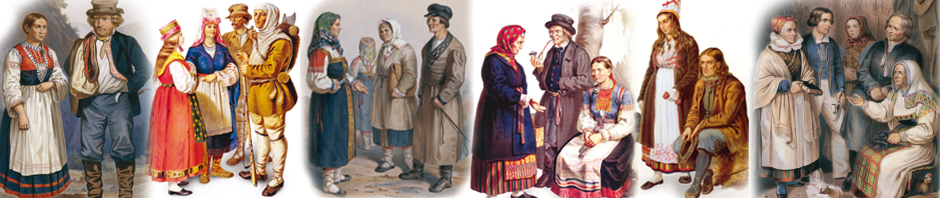
Results and Discussion. Heikel’s work represents a unique collection of data, comprising more than 250 color illustrations and approximately 2,000 ornament pattern diagrams. The distinctive features of the Finnish researcher’s methodology have been identified, including the detailed documentation of garment construction and embroidery techniques. He was the first scholar to systematize the folk terminology of ornaments (e.g., numolon pilet, vete kit). The significance of his work extends beyond that of a passive archival source. The inclusion of precise garment-cutting patterns and authentic names of ornamental motifs makes it an effective methodological guide for contemporary artisans, enabling the reconstruction not only of the form but also of the semantic content of traditional costume.
Conclusion. In the context of contemporary ethnocultural processes, the scholar’s work acquires a new function, serving as a scientifically grounded foundation for the revitalization and authentic reproduction of traditional heritage. Future research prospects are associated with the creation of a digital database of Heikel’s ornaments, the field-based verification of his terminology, and the development of validated reconstructions of traditional Mordovian costume based on his schemes for use in educational and heritage revitalization projects.
Keywords: A. О. Heikel, ethnography, Finno-Ugric Peoples, Mordovian People, traditional clothing, ornament, revitalization
Conflict of interest: The authors declare no conflict of interest.
For citation: Rogachev V.I., Gordina S.V., Nemechkin V.N. A. O. Heikel’s Work as a Source on Material Culture and Contemporary Revitalization Practices. Finno–Ugric World. 2026;18(2):234‒253. https://doi.org/10.15507/2076-2577.26182.234-253
REFERENCES
- Tikhonova A.Yu. [Study of Regional Features of Folk Culture (Based on the Mordvins of Simbirsk Province)]. Bulletin of the Chuvash State Institute of Culture and Arts. 2019;(14):135‒139. (In Russ.) https://elibrary.ru/jsxqdb
- Rogachev V.I. [Axel Heikel: Pages of Life and Work]. Vestnik Mordovskogo universiteta. 1997;(1):63–66. (In Russ.)
- Shigurova T.A. Breast Decorations of the Middle of the XIX Century in the Moksha Women’s Costume of the Insar District: A Local Version of the Villages of Levzha, Perkhlyai, Suzgarye. Finno-Ugric World. 2023;15(3):368‒379. (In Russ., abstract in Eng.) Available at: https://csfu.mrsu.ru/ru/archives/4687 (accessed 17.04.2026).
- Zagrebin A.Ye. Axel Olai Heikel: Burden of the First. From the History of Finno-Ugric Ethnography. Bulletin of Udmurt University. Ser.: History and Philology. 2019;29(1):29‒36. (In Russ., abstract in Eng.) https://elibrary.ru/wgaygy
- Tsydenova N.V., Chagdurova M.M. Archaeological Studies of Axel Heikel in Transbaikalia. Theory and Practice of Archaeological Research. 2024;36(4):215–223. (In Russ., abstract in Eng.). https://doi.org/10.14258/tpai(2024)36(4).-14
- Mokshin N.F., Mokshina E.N. On the Contribution of Finnish Researchers to the Study of Ethnography of the Mordovian People. History and Modern Perspectives. 2019;1(4):72–76. (In Russ., abstract in Eng.) https://elibrary.ru/xaidnw
- Bikeуkin E.N., Guseva T.M., Kursheva G.A. The Traditional Culture of the Mordovians in the Kazan Province: A Historical and Ethnographic Perspective. Finno-Ugric World. 2025;17(1):80‒89. (In Russ., abstract in Eng.) https://doi.org/10.15507/2076-2577.017.2025.01.080-089
- Korolainen K. Perinnetieteet ja piirrosten tieto: Piirrosten asema Axel Olai Heikelin ja Elsa Enäjärvi-Haavion tutkimuksissa. Elore. 2014;21(2). (In Finn.)
- Kornishina G.A. Mordovian Traditional Women’s Headdresses in the Context of Their Ethnic and Territorial Identity. Finno-Ugric World. 2020;12(2):184‒193. (In Russ., abstract in Eng.) https://doi.org/10.15507/2076-2577.012.2020.02.184-193
- Lunina M.V. [The Symbolism of the Mordovian Holiday Costume]. Ogarev-online. 2015;(3). (In Russ.) https://elibrary.ru/tmoeaz
- Shigurova T.A. Fabric Semantics as a Basis of Mordovian Embroidery. Finno-Ugric World. 2021;13(3):308‒320. (In Russ., abstract in Eng.) Available at: https://csfu.mrsu.ru/ru/archives/3836 (accessed 17.04.2026).
- Levina L.D. [The Role of A.O. Heikel’s Scientific Research in the Preservation and Development of Mordovian Embroidery]. Kraevedcheskie zapiski. 2013;(20):49–53. (In Russ.) https://elibrary.ru/wydhxz
- Rogachev V.I., Karabanova N.V. Ethnic Symbols of the Finno-Ugrians and Its Functions (on the Example of the Erzya and Moksha Semiotic Codification Systems). Finno-Ugric World. 2024;16(4):514-517. (In Russ., abstract in Eng.) Available at: https://csfu.mrsu.ru/ru/archives/5456 (accessed 17.03.2026).
- Ryabov N.V. Traditions of the Mordovian Ornament in the General Conception of the Volga Region National Culture. Vestnik Bashkirskogo Universiteta. 2014;19(2):671‒674. (In Russ., abstract in Eng.) https://elibrary.ru/smtfcx
- Kudryavtsev V.G. [Study of the Volga Region’s Folk Art by the Finnish Artist Agaton Reinholm]. Aktual’nye problemy gumanitarnyh i estestvennyh nauk. 2014;(12‒2):166–168. (In Russ.) https://elibrary.ru/tfgnfb
- Kirshenblatt-Gimblett B. Intangible Heritage as Metacultural Production. Museum International. 2014;56(1‒2):52‒64. Available at: https://www.sci-hub.ru/10.1111/muse.12070 (accessed 17.03.2026).
- Salminen T. National and International Influences in the Finnish Archaeological Research in Russia and Siberia. Fennoscandia Archaeologica. 2003;(20):101‒114. Available at: https://journal.fi/fennoscandiaarchaeologica/article/view/126711 (accessed 17.03.2026).
- Denikaeva E.A. To the Problem of Historiography of Studying the Ornaments of the Finno-Ugric Peoples (by the Example of Ornamental Themes of the Mordovians-Erzy and Moksha). Vestnik Chelyabinskogo gosudarstvennogo pedagogicheskogo universiteta. 2011;(12‒1):270-280. (In Russ., abstract in Eng.) https://elibrary.ru/opicuz
Information about the authors:
Vladimir I. Rogachev, Dr.Sci. (Philos.), Associate Professor, Leading Researcher of the Interregional Research Center for Finno-Ugric Studies, National Research Mordovia State University (68 Bolshevistskaya St., Saransk 430005, Russian Federation), ORCID: https://orcid.org/0000-0003-2830-8667, rogachev-v@bk.ru
Svetlana V. Gordina, Cand.Sci. (Ped.), Director of the Editorial Board of Scientific Journals, Higher School for Development of Scientific and Educational Potential, National Research Mordovia State University (68 Bolshevistskaya St., Saransk 430005, Russian Federation), ORCID: https://orcid.org/0000-0003-2265-418X, sciedit@mrsu.ru
Vasily N. Nemechkin, Cand.Sci. (Law), Associate Professor, Director of the Interregional Research Center of Finno-Ugric Studies, National Research Mordovia State University (68 Bolshevistskaya St., Saransk 430005, Russian Federation), ORCID: https://orcid.org/0000-0002-3650-4185, modmn@mail.ru
Authors’ contribution:
V. I. Rogachev – ideas; formulation or evolution of overarching research goals and aims; preparation and creation of the published work.
S. V. Gordina – ideas; formulation or evolution of overarching research goals and aims; preparation and creation of the published work by those from the original research group, specifically critical review, commentary or revision – including pre- or post-publication stages.
V. N. Nemechkin – verification of the reproducibility of the research results within the framework of the objectives of the research; conducting a research and investigation process, specifically performing the data.
All authors have read and approved the final manuscript.
Submitted 07.03.2026; revised 21.04.2026; accepted 28.04.2026